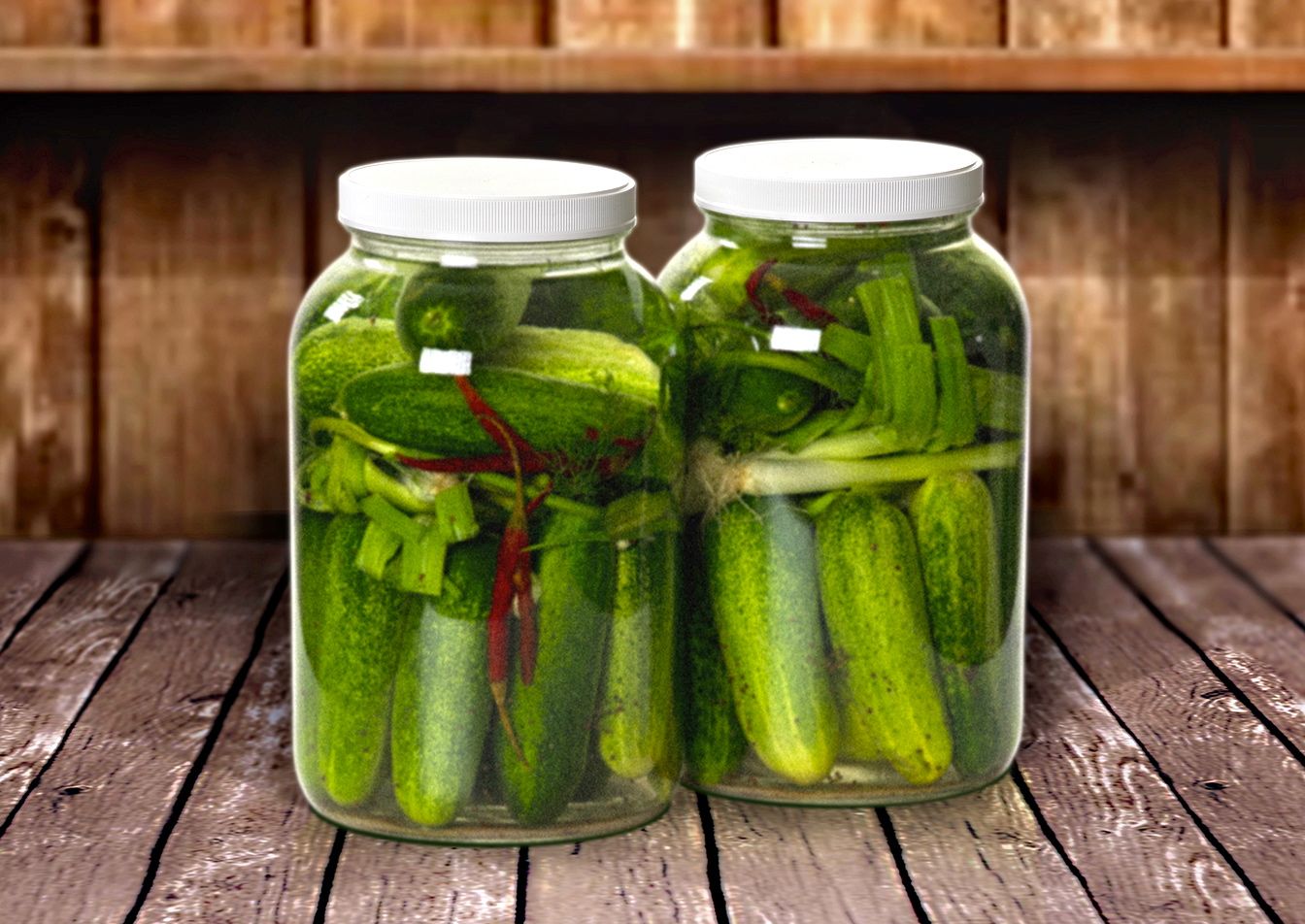
Do you fancy yourself a fearless fermenter? Have you made sauerkraut, chutneys and pickles galore? How were your pickles? Were they crisp and delicious? Tell the truth.
One of the most frequent fermentation flops I see are hollow or soft pickles. It's a shame, because crunchy pickles are a classic, fundamental, and encouraging way to begin your metamorphosis into a confident fermenter.
Here's a little secret that our ancestral fermenters held as common knowledge. There must be sufficient tannins present during fermentation to yield crisp pickles. This includes ingredients like grape leaves, red wine vinegar, bay leaves, cloves, oak leaves and tea.
This is why I choose to include grape leaves in my pickle fermentations.
Summer is disappearing and so are the vegetables of this sun-kissed season. It's time to put your cucumbers up as pickles for winter nights when you want to serve your friend charcuterie with crunchy pickles on the side.
Crunchy pickles ingredients
- Water, to cover pickles
- 4-5 mini cucumbers, whole
- 1 scallion
- 3 cloves garlic, peeled and crushed
- 1 frond dill
- 2 bay leaves
- 2 grape leaves*
- 1 ½ tablespoon unrefined sea salt
- 2 dried red chili, optional
Crunchy pickles method
- Lay 1 grape leaf at bottom of jar.
- Add cucumbers to jar vertically so that they are standing on end. They should fit together tightly.
- Fit scallion, garlic, dill, bay leaves and red chili in between cucumbers.
- Add salt on top of cucumbers.
- Place grape leaves over cucumbers like a canopy. The edges of the leaves should be pushed down below the shoulder of the jar.
- Cover entire mixture with water. Take care to leave an inch between the lid and water level.
- Fit lid on firmly but not tight.
- Allow to ferment (out of direct sunlight and in a room temperature environment) for 1-2 weeks.
 This post was generously contributed by Monica Ford of Real Food Devotee. Monica's recipes will make your mouth water and your tummy purr. If you're lucky enough to live in Los Angeles, Real Food Devotee can make your life easier by delivering nutrient dense goodies directly to your door.
photo credit: An Eye Full Studio








If using tea, would you just put loose tea in the jar with the rest of the stuff, does it need to be a certain kind (black?), and would it change the flavor at all or discolor the pickles?
We add pickling spice to our pickles too and I haven’t ever put a scallion, but I bet it is good. I added organic grape leaves I found at our local farmers market this year, and I hope it helps them remain crisper. So far I haven’t noticed much of a difference, but time will tell.
Hi @ Alicia
You can add lose black tea. There is a very slight flavor change. Very subtle. One tablespoon lose black tea per 1 quart pickles. I’ve never seen the color change from this before
Let’s us know how it turns out @Lisa
Are you using a starter culture?
I don’t use a starter. They didn’t seem to be any crisper this year than in the past, after a while they get soft and some are hollow.
I’ll just have to keep experimenting.
I’ve never fermented anything EVER, but I’m going to after seeing how easy this is!!! 🙂 My only question is, after the 2 weeks of fermentation at room temp, how long do these keep, and should they be refrigerated??? Sorry if these are silly questions… I’m new to this!!! Thanks for the recipe!!! 🙂
Hi @Tami
I am so excited for you to begin. Not silly questions at all. You are partnering with mother nature to perform magic after all:)
After 2 weeks, put your pickles in the refrigerator where they will continue to ferment At a much much slower pace than when they were on your counter. They can be eaten right away for during the months to come.
Take care to store your pickles under the brine you have made and without double dipping a forkin the jar etc
I’ve also heard of using horseradish leaves to maintain crispness. My main problem is getting the grape leaves or horseradish leaves fresh to put into the jars when you have time to ferment. How would one use the other options listed (bay leaves – fresh or dry, red wine vinegar, cloves, or oak leaves – fresh or dry). Will scrub oak leaves work like regular oak leaves? I live in the dry west, so a little limited. Thanks for this post!!!!!
Hi @Kelly
Use 4 bay leaves- fresh or dry for this recipe
Use 1 T red wine vinegar for this recipe
Use 1 T cloves for this recipe
Use oak leaves – fresh or dry: I have never used these dry but, I think they would be worth a try if thats all you have access to and do not see why they wouldn’t work.
Will scrub oak leaves work like regular oak leaves? I have never used these but, I think they would be worth a try if thats all you have access to and do not see why they wouldn’t work.
Let us know how it turns out, Kelly! xoo
We love pickles and I have been wanting to make fermented pickles but what gets the pickles to ferment in this case? I presume they naturally ferment so this would be different than lacto fermenting?
I’ve always had hit and miss luck with pickles. They taste good, but the crunchiness varies with each season. I’m going to give this recipe a try next!
Happy fermenting, @Kari
By oak leaves you mean, real oak leaves from oak trees? I have 2-300 year old or so oak trees in my back yard and all the other ingredients. I am drying out my dill from the garden, so what is the dried dill amount vs fresh?
Thanks
Emily
Hi @Emily
Yes! You may use your oak leaves and I think 1 T dry dill will do the trick in this recipe.
So you don’t can these? Can you store them out of the refrigerator? I am new to fermenting. I just got konvucha down but that seems to be all I can master and I can never find the help I need. So any advice is greatly appreciated!
So excited that I stumbled on this recipe! Thank you for this! I’ve never tried pickling before, but this recipe makes it look like a cinch! I have a 56 ounce jar that I’d like to use since it holds more cucumbers but I’m wondering if I would need to add more of the other ingredients to compensate (i.e. salt?) What would you suggest?
I read that you should cut the ends off the cucumbers, especially the stem end. Evidently it releases a substance that softens the cucumber. Last year I used wild grape leaves from my back yard. The pickles stayed crunchy.
I was also wondering if hop leaves have enough tannins to help.
Hi Emily.
I’m in the LA area, too, and I’m wondering if you use tap water for fermenting. I understand that chlorinated water can prevent the fermentation process, but I hate to buy any kind of water in plastic jugs. What do you use? Thanks so much! Michelle
Hi Michelle, no I don’t use tap water for fermenting at all. You can see what I use here:
You can dechlorinate city tap water by boiling it for 20 minutes or letting it sit in an open bucket or pan for 24 to 48 hours. Of course, if you are on a private well, you can use it straight from the tap unless you are adding chemicals.
I love Kosher (brine, not vinegar) dill pickles. What else can you use instead of grape vine leaves? Can you use fig leves (I have a fig tree in my back yars).
Thanks,
Nick
Hi Nick, yes you can use fig leaves for pickling. Good luck! xoxo Emily
How long will these fermented pickles keep? After they ferment for two weeks should they be refrigerated?
Hi Tammy, yes – after fermenting the pickles should be refrigerated. They should keep for a few months. xoxo Emily