Natural treatments for PCOS (polycystic ovary syndrome) can be very effective, and among them is eating the right diet for this condition. Let's work out what the best diet for PCOS looks like (and why) – including some strategies that may surprise you.
What is PCOS?
PCOS is the most common hormonal disorder affecting as many as 1 in 10 women of childbearing age in the U.S., and it is the largest known cause of female infertility. (source)
Women with PCOS often have fluid-filled sacs (cysts) in their ovaries, insulin resistance, and elevated androgen levels (male hormones).
Common symptoms of PCOS include:
- Irregular or absent menstrual periods
- Infertility and miscarriage
- Weight gain, especially around the middle
- Facial hair or other male hair growth/balding pattern
- Blood sugar imbalances
- Acne or oily skin
- Other skin abnormalities including skin tags or patches of dark, thick skin on the neck, arms, breasts, or thighs
- Pelvic pain
- Depression/anxiety
Many women with PCOS will not have all of these symptoms, and some are asymptomatic, or are only diagnosed after frequent miscarriages or the inability to conceive. While there is no known cause of PCOS, it is likely that poor diet and lifestyle are contributing factors.
Which brings us to…
The best diet for PCOS – 6 surprising strategies:
#1 – STOP DIETING
According to a recent study at the University of California in Los Angeles, the most consistent predictor of future weight gain is dieting. In other words, diets don't work. Many diets are based on either gimmicky products with toxic ingredients or some sort of deprivation.
 Any dieter will tell you that dieting is hard and results are inconsistent and difficult to maintain.
Being overweight can make PCOS worse, but frequent dieting actually slows your metabolism and deprives your body of essential nutrients, contributing to further deterioration of your health.
So the #1 rule of healing through food for any condition is to stop dieting. The next steps are to eat REAL Food, and start listening to you body. I know, this task falls into the much-easier-said-than-done pile, but I promise it's not that hard.
Read this beginner's guide to Real Food, and make sure to start with what inspires YOU. Then read below to learn how to heal your metabolism, manage your blood sugar, and control food cravings.
#2 – Eat more fat
 I meet lots of women who believe that they eat “healthy,” and while their diets don't contain lots of processed junk, they are missing (or super skimpy with) one of the three main macro-nutrients of food: FAT.
Contrary to mainstream beliefs, saturated fat and cholesterol are essential to human health. Your body needs these “evil” nutrients to produce hormones and keep them in balance, and saturated fats help your body to metabolize vitamins and minerals.
It has only been since the advent of modern “franken-foods” (margarine, industrial vegetable oils) that we have sought to demonize good-quality animal fats.
Hang on to your hats… here's what to include:
- Butter and cream from grass fed cows – read more about why butter is better than those weird “heart-healthy” spreads.
- Lard from pigs raised outdoors on organic feed – this includes nitrate-free bacon! – Read why I heart bacon.
- Meat – including the fat – from pasture raised beef, bison, venison, etc.
- Eggs – including the yolks – from pasture raised hens
- Coconut oil
- The usual “healthy” fats – olive oil, avocados, wild caught fish from cold waters.
#3 – Eat meat, but choose pasture raised only
When it comes to PCOS, your body needs nutrient-dense foods, and does NOT need extraneous hormones and toxins.
“Red meat” has gotten a bad reputation in the health-conscious community, but it really depends on how the animals are raised.
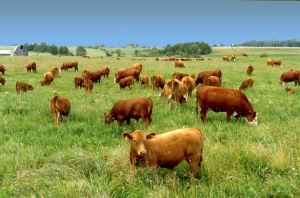 That's why it's important to seek out grass fed meat to ensure that you are receiving the essential fats and fat-soluble vitamins without an extra toxin load (hormones, pesticides) from unhealthy animals raised in stressful confinement.
You can read all about the health benefits of grass-fed vs. feedlot beef here.
Keep in mind that “organic” doesn't necessarily mean an animal has been raised in the proper conditions. It just means they were fed organic feed while raised in confinement.
A note about eating out: Most restaurants (even fancy ones) serve factory-raised meat and dairy unless otherwise specified. If you aren't willing to only eat at home for every meal, familiarize yourself with eateries that carry pasture-raised, or at least organic, meat. Find more tips on how to eat out here.
What About Dairy?
In Traditional Chinese Medicine, it is advised that women diagnosed with PCOS avoid dairy products. PCOS is thought to be a condition of “damp accumulation,” and dairy generally contributes to this problem.
 As at TCM practitioner, I take this on a case by case basis. For women who have dairy allergies or sensitivities, I certainly recommend avoiding milk, yogurt, cream, and cheese at least until their food allergy is reversed. (Learn about reversing food allergies here.)
For others, I recommend only eating raw dairy from pasture-raised animals. Because of the natural probiotic content of raw milk products, they are often much easier for the body to assimilate, resulting in less “damp and phlegm” conditions. I never recommend eating low or non- fat dairy. Read why you should skip skim milk here.
You can read more about the general milk controversy here.
#4 – Ditch this stuff:
Hopefully this is the least surprising strategy as we carve out the best diet for PCOS, but it is essential that you eliminate the following junk from your daily meals:
 Soy – contains phyto-estrogens that mimic estrogen and throw your hormones out of whack. Read more about why soy is not safe here.
- Reduced-fat foods – Reduced fat foods often contain weird stabilizers to maintain desired consistency or – in the case of low-fat dairy – oxidized cholesterol (the bad kind).
- Industrial oils – Despite what anyone tells you, canola oil is not healthy. It falls in the same trash bin as corn, soy, cottonseed, and grapeseed oils, and should be avoided. These oils contain very unstable poly-unsaturated fatty acids or PUFAs. You can read all about the evils of PUFAs here.
- Chemical preservatives, additives, artificial sweeteners, and coloring – This should go without saying, but chemicals will put more strain on your already taxed system. Eat Real Food, read labels, and think before you bite.
#5 – Manage your cravings
I've experienced a few sugar cravings in my life. So I also know that wanting a cookie can feel more like a starving lion being tempted with a juicy gazelle just out of reach.
 Thankfully, I recently had the privilege of listening to a lecture series by a really smart lady named Dr. Julia Ross who taught me a thing or two about managing those roaring sugar cravings.
What I learned from Dr. Ross, is that sugar is FOUR TIMES more addictive than cocaine, and that many sugar cravings are due to a neurotransmitter deficiency (these are the brain chemicals that communicate information throughout our brain and body). This can happen because you eat a crappy diet, you don't get enough sleep, or you have been under a lot of stress (either acute or chronic).
Here's the good news:
You can cut craving for sugar by giving your body the amino acids it needs to correct your particular imbalance.
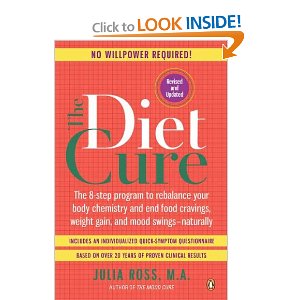 Check out this chart to find out if you may be low in any of these five neurotransmitters and what amino acids which may help to curb your cravings.
If this seems relevant to you, check out The Diet Cure to learn more. You can also read my friend Kristen's experience with beating sugar cravings at Food Renegade.com.
In relationship to PCOS and diet, I think neurotransmitter therapy is a great tool to you use while you work on #6…
#6 – Heal your metabolism to manage your blood sugar
One of the most common dietary recommendations for PCOS is to control your blood sugar, because insulin resistance and elevated blood sugar play a role in perpetuating PCOS symptoms.
In a nutshell, here's what happens:
In healthy folks, insulin helps to make a gate for glucose (sugar) to pass through cell membranes where it will be processed into energy.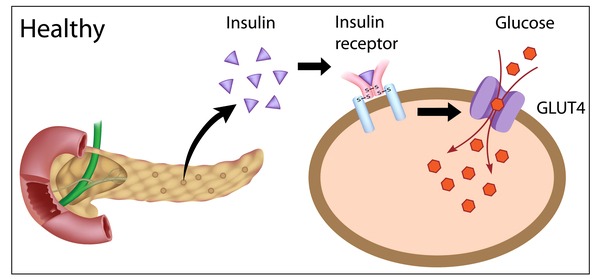
Insulin resistance (IR) develops due to high stress, unhealthy lifestyle, or sometimes genetics. With this condition, your body's cells don't play nice with insulin, so there is no way for the glucose to pass through.
Glucose then floats around the blood stream (elevated blood sugar) until it is converted to fat by the liver.
 Insulin resistance also elevates insulin levels in the blood stream. This excess insulin stimulates the ovaries to produce large amounts of the male hormone, testosterone – which can inhibit ovulation.
Elevated insulin also triggers the body to convert testosterone to estrogen, which upsets hormone balance, perpetuates weight gain, and contributes to the formation of ovarian cysts. (source)
Mainstream advice is to cut out processed carbohydrates including white breads, pasta, potatoes, and cereals. Many people turn to a gluten-free, low sugar diet, including paleo or primal diets.
These approaches may work for some women to manage blood sugar, reduce the symptoms of PCOS, and promote fertility – at least in the short term.
Does eliminating carbs fix the problem or just avoid it?
Health researcher Matt Stone claims that avoiding sugar and starches to deal with insulin resistance is dodging around the problem rather than healing it, and that a long-term restrictive diet will only lead to more health issues down the road.
Stone asserts that in order to truly correct insulin resistance, you must heal your metabolism. And in order to heal your metabolism, you CANNOT eliminate macro-nutrients (protein, fat OR carbohydrates). He says:
The root cause [of PCOS] is probably a quintuple combination of excessive polyunsaturated fat accumulation in your tissues (which is estrogenic), excessive consumption of xenoestogens (toxic chemical pollutants) and phytoestrogens – soy being the worst offender, oral contraceptive use, excessive stress and inflammation, and repeated attempts at weight loss through any of the popular approaches ranging from doing lots of “cardio” to calorie restriction. (source)
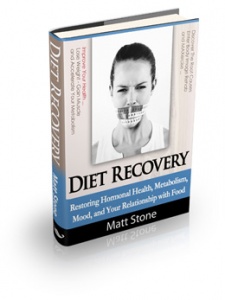 Stone's program that includes “Rehabilitative Rest and Aggressive Re-Feeding” – basically lots of sleeping and eating until balance is restored – may be the right solution for many women with PCOS and infertility, especially those with a history of restrictive diets or endurance exercise.
I highly recommend Stone's book Diet Recovery: Restoring Hormonal Health, Metabolism, Mood, and Your Relationship with Food, an intriguing approach at permanently healing your metabolism and improving overall health. While his methods are certainly unconventional, healing the root of any condition always makes the best sense to me.
Whoa! Are you still there? Apparently I have a lot to say about the best diet for PCOS…and that's because it's so important. I hope you find this information useful.
Got questions?
Leave them in the comments below.
 How your lifestyle may be inhibiting your ability to conceive – and what to do about it

Hi,my daughter has Pcos – she has had anxiety nd depression for about six years and s slowly recovering. She s only 24 years. Sam s about 100 kg and 5foot1inch. She s also a vegetarian (as am I) besides coconut oil, what can she use to supplement meat for ths diet. Eating met is nt an option.
I also have just discovered I have PCOS I am a veggie I just eat green veg leafy salads I make my own veggie burgers with sweet potato, cinnamon tea is amazing too I would love some more veggie recipes for PCOS I am afraid to eat eggs as Dairy is bad
Agreed.
Eggs are not dairy… Dairy is anything that comes from a cow. ; )
Eggs are not dairy. Dairy is milk from animals and products made from said milk. (Cheese, butter, cream, ect.)
Hi i just found out that i had pcos about a year ago. i have been trying to concieve for 10 yeas, and knew something was wrong with me! when i found out that i had pcos i wasnt really shocked but just sad. I got put on clomid for 3 months and that didnt do the trick, So my doctor has me on mediformin now, and i have been on it for a little over 2 months. The only thing im confused about is i have normal periods every month and i always have! Im not over weight, im actually just right so my question is will this mediformin work for me to concieve a child? im only 28 years old and have wanted a child for sometime now. thanks
Hi Shannon, thanks for your comment. I can’t tell you what medication will work for you without more information about your condition. I’ve just launched an ebook called Feed Your Fertility with Laura Erlich. This book addresses diet for PCOS and many other fertility issues.
Otherwise if you are more interested in following a natural path to recovery, feel free to schedule an appointment with me via EmilyBartlettAcupuncture.com.
Hi SHannon! since you posted this just a few days ago, I hope you will read this. A couple years ago (I was 35), we had difficulty trying to conceive our 2nd child. After 1 1/2 years and 3 miscarriages, I was diagnosed with PCOS. Like you, I’m ‘average’. I charted my cycle religiously, and to me, I was regular – periods every 28-30 days. BUT upon further looking, my doctor could tell that my body was taking too long to ovulate, and my ovulations was suboptimal. You might want to consider charting your cycle if you don’t already. I DID use Metformin, as it’s kind of a standard treatment for pCOS – helps manage your body’s insulin resistance, and there are insulin receptors on our ovaries. Some PCOS women only need Metformin to get pregnant! I also used something like Clomid. But in my humble opinion, stick with the Metformin and YES there is hope!!! Stick thru the icky Metformin side effects, along with diet changes and exercise. Good luck!!
Thanks laura
Hi Shannan
Just wanted to let you know that with a combination of
Clomid and metformin managed to conceive after 15 years of
Pcos issues. Second time around I conceived without either. Don’t give up hope.
Wow thanks rockerb ya thats the next step my doctor wants to take is the clomid and med combo. This really gives me hope
Hi Shannon,
I tried to conceive for 4 years before finding out I have PCOS. I completely altered my eating habits and eliminated all processed and sugary foods, and within 5 weeks I was pregnant!! After having my son and finishing up breastfeeding, I started on Metformin, and 16 months later we are now pregnant with our second baby……..and we weren’t even trying!! It can be done, PCOS does NOT have to rule your life and your chances for a family. Stick to a lifestyle plan that is sustainable and works with your body and that family you’ve always wanted could be right around the corner 🙂 All my best!!
Thanks sarah I hope everything works out
Hi. I also couldn’t conceive for 5 yrs and was diagnosed with pcos. I was put on metformin and got pregnant 8 months later. I stayed on metformin throughout and had a healthy baby girl and when she was 18mo old I got pregnant again! I now have 3 healthy kids and am still on metformin. Hang in there!! I am sure you will find success!! 🙂
Hi Shannon,
I found out I had PCOS on my own after complaints to all kinds of doctors (I am not overweight either, so no one suspected) and after a year of 2000 mg of Metformin I was able to conceive. So all the best to you! Although, I now have a 3 year old and Metformin and Clomid aren’t helping… so the one bit of advise I wish I took from a fellow PCOS lady was to not take a break after giving birth. Second time around is a PAIN. Next step is to tinker with my diet.
Look into DIM and vitex, Cinnamon. Iodoral and chromium
I agree! Tried clomid a long time ago – nothing happened except I turned into an emotional girl w/severe migraines. We just gave up. Then on a whim, I took vitex (chasteberry) in 2009 & was pregnant in three months without charting! I use it now (& swear by it) to keep myself “normal” along with a veg diet & exercise.
As for soy, I’m not sure I agree to avoid it altogether. Everyone is different and there are a lot of different studies on the matter. I avoid processed soy but use whole forms a few times a week.
Hope this helps!
I tried shola oslo pills and 2 babies now
Hi I have pcos for about 3 years now I am also trying to conceive but have been unable to I’ve been on Clomid just started actually still awaiting to see if it works within the other two months I do suggest though that maybe you are timing intercourse at the wrong time . Try using an ovulation predictor kit however try having intercourse at least 3-4 days before you ovulate and more on the days you do ovulate maybe this can help increase your chances. Also maybe you should take another look at your diet maybe weight sometimes losing some weight helps as well as egg health try to increase your egg health . Another thing women ignore is iron most women need more iron in their diet if not use a supplement. Trying to conceive also works both ways where the woman is healthy as well as the man maybe try convincing your husband or significant other to take zinc supplements as this can help him to .
Metformin has been instrumental in allowing my sister to conceive 2 times. It helps the Insulin In your body to work. Since PCOS is a pre-diabetic condition. Stay on it and you will be pregnant in no time, Good Luck!
get Hemp protein 50% the 72% is stripped of too many good things. As well hemp seeds.
Hi I was recently diagnosed with PCOS. I can’t lose weight and need to. Can you please give some avenues to explore.
Have you tried low carb. I understand that our host here is not for it but for millions of people it has been the answer to PCOS. Also, I would look into supplementing with iodine. This has to be done carefully so do your research. This has been key for me, when I was gaining with no change in diet.
Dora, or anyone with info on the subject – can you please tell me more about supplementing with Iodine for PCOS. A trainer I work out with suggested I started taking some as well. He recommends the brand Terry Naturally – Tri-Iodine. I take 1 capsule daily in the am, and it has 12.5 mg/capsule. Just looking for a good source to read more on Iodine supplementation for PCOS. Thanks in advance!!
This is an awesome article! Thank you! 🙂
I’ve been following most of the above recommendations for the last year and am feeling very, very good now. I have even reversed many of my hypothyroidism and fibromyalgia symptoms! I am also supplementing with natural progesterone (and eating a fertility diet) to help raise those levels up.
I recently found about Go Kaleo and how she reversed her PCOS through strength training. I just started that and will see how it goes. At least it’ll make me stronger, right?
I think another step in my recovery will be to buy raw cow’s or goat’s milk instead of the cow’s milk we drink.
But isn’t eating REAL food, dieting? I mean dieting is going from one form of eating to another form. What we eat is our diet. Dieting is changing what we eat? We go from eating processed foods to real foods is dieting in my mind still, it is just a forever change though it seems more and more diets are being honest that changes do need to be life long. Maybe I am just caught up on definitions. To be though, REAL food is just another way of dieting. Anything that is not native to what we already eat is dieting in my mind. I could always be wrong. Let me know if you ever want to guest post on my blog about this! 🙂
Hi Kimberly – I see what you mean. I would say that what we eat is our “diet” and “dieting” is when we restrict what we eat.
Switching to Real food may feel restrictive at first while you are eliminating non-foods/processed junk.
Personally I find that there is really nothing that I don’t allow myself to eat – burgers, fries, pizza, nachos, ice cream, even candy – I just prefer to eat versions made with Real food. Occasionally when I eat something that is not Real food, it is disturbingly non-food-like to me… Like eating cardboard, or poison.
So I never feel like I’m dieting with Real food, only eating exactly what I crave.
Thanks for this interesting discussion!
I’m new to PCOS, I was diagnosed in December and have been doing a bit of research since then. My cousin, who also has PCOS, went to a specialist recently and he put her on a low carb, no starch version of the Paleo diet. But for me and my cousin, we’re not looking at this as a diet. For us it’s a lifestyle change. If I’ve really found a way to get my weight under control and stop the constant pain (and stop taking so much ibuprofen all the time) then I would never go back to eating badly.
I think in our current US culture, “dieting” usually means to restrict what you eat. . . . often times in order to lose weight. Everybody has a diet by the other definition . . . a group of things that you eat.
I thought women with PCOS should avoid dairy because it has IGF-1 which increases androgen production from the adrenal glands? IGF-1 specifically stimulates an enzyme called 5 Alpha Reductase, which converts testosterone to its stronger form DHT (dihydrotestosterone), causing acne and hirsutism in people with PCOS.
Forgot to mention, I have heard Dr Julia Ross as a guest speaker on Blog Talk Radio, she was amazing, very thorough. She mentioned PCOS and Endometriosis. If anyone is interested http://www.blogtalkradio.com/undergroundwellness/2012/06/22/the-diet-cure-2012-with-julia-ross skip to the 2nd half of the program where they talk about women’s issues.
I am loving the coconut oil at the moment, I take it every day and have been researching its benefits, it is full of a healthy fat called Lauric Acid which is fantastic for our bodies and is supposed to assist with weight loss 🙂
The first part of this seems right on to me but I was surprised to see the Matt Stone recommendation at the end. Doesn’t Matt suggest all sorts of less than stellar foods? Soda, potatoe chips, crackers, pancakes with syrup and such. To eat quite a few carbs…all those things that spike blood sugar. Isn’t that conflicting with #6?
Hi Sam – I know that some readers are really put off by Matt Stone. Suffice to say, I am put off by the fanaticism of his ‘disciples’. Matt himself has some really smart ideas.
While recommending junk food may seem like dietary suicide, it is actually a brilliant way to heal from all of the sub-clinical eating disorders that we suffer from in our modern world. Allowing yourself to have what you think you want is the first step in healing your body’s broken ability to really tell you what it needs.
PCOS is complicated and very different for different women, so the solutions vary widely as well. With anything my hope is to empower readers and my patients to start to make decisions that really resonate for them.
Hope this helps to clarify!
So can anyone point me toward a more detailed list or diet of recommended foods for PCOS treatment? I have been battling PCOS for years now, without much luck. It’s nearly impossible for me to lose more than 5-20 lbs without regaining it all back again. I was finally able to conceive, and have my son 2 1/2 years ago. But since then every symptom has practically doubled. I’m heavier now than I ever was, and nothing works like it used to. I am heavily researching holistic approaches, because I’m so sick of feeling sick! Dr. has me on Metformin now, which I hate taking. Please help!
Matt Stone’s book worked for me — I kept regaining everytime I’d lose weight — until I finally got off the hamster wheel (see my comment below).
I’ve been struggling with cysts rupturing on my ovaries for the past few months… The pain has been so severe that originally the doctor told me that he was almost certain I was dealing with an ectopic pregnancy… Weight is a concern for me, but not a huge one, I’m short, but muscular, and I have gained a little bit of weight since I started my professional degree in college. I’m only 20 so the idea of possibly becoming infertile is what scares me the most about this condition. I am a vegetarian and have been for about 14 years and have no intention to stop. So soy based meat substitute products have been a staple for me. I do however drink milk and occasionally eat eggs. Do you have other dietary options that do not include meat that can help my PCOS?
Hi Carissa – I would absolutely ditch the soy.
I have a question in regards to soy lethicin . I have become more and more aware of the amounts of soy that is in our everyday food and make every effort to avoid it, but recently I have noticed that even products you would assume don’t have soy in them, have soy lethicin. Is this additive something us women with PCOS should avoid as well or are the quantities so small that it’s not something to worry about. Is it the same for non-gmo sources as well?
Thank you for your time.
Hi Amanda – This would depend on the individual. In general I think a smidge of soy lethicin every now and again isn’t the end of the world, but with women with PCOS it may be necessary to avoid all traces of soy depending on your symptoms, severity, and health goals (like getting pregnant, for example).
Soy lethicin tends to be in packaged foods, so if you focus on whole, unprocessed foods, you’re likely to avoid most sneaky ingredients like this one.
As for GMOs – everyone should avoid at all costs IMHO. Wishing you the best!
Thanks so much for this series on PCOS. I’ve been living with it for 10 years now, and my husband and I will be trying to conceive this fall. I was a pescatarian for three years, but I have recently switched to a whole, traditional foods diet at the encouragement of a cousin who is a public health professor (I’ve been reading a lot from Nourishing Traditions). So far so good, but I’ve added a lot of dairy back into my diet that I wasn’t eating as an herbivore. I’ve located raw milk and tried some, but my access to it isn’t convenient or practical, so I’ve been buying a local milk that is very close to raw (un-homogonized, organic). I’m wondering if cutting out this dairy would help during conception, although my midwife suggested I eat plenty of full-fat dairy during this time. I work full time and am interning as part of my master’s program, so my diet isn’t always as perfect or nutritious as I want it to be. Any suggestions for a good prenatal vitamin I can take to help supplement when I’m not eating perfectly? I’m already taking fermented cod liver oil daily, as is my husband. Thanks, and thanks always for the great information and insight.
Hi Tessa, thanks for sharing and for your question. I would suggest this prenatal supplement. Other than that, just keep on doing what you’re doing.
That supplement contains soy. In the above article, you recommend no soy.
Hey Emily!
I have a quick question about Pasture Raised meats. I have been a vegetarian for about a year since I discovered how awful factory raised meats are … Since then I have read Nourishing Traditions and followed many Real Food blogs and I absolutely believe that I should introduce meat back into my diet…but living in Canada I have had trouble finding Pasture raised meats since we don’t have green grass half the year for the animals to eat!! That being said, would you recommend just buying local, Organic Meats? There are some small farms in Quebec (I live in Montreal) that sell their meats in healthfood stores, they are organic but most definitely not 100% grass fed and . Would it better to leave that meat out as well?
Thank you for your response!
Hi Hillary, thanks for your comment. If I were in your situation, I would prioritize grassfed over local and mail order meat. U.S. Wellness meats ships to all fifty states, Puerto Rico, Bermuda and most of Canada. So, perhaps that would be something worth looking into so that you can reintroduce meat into your diet?
Hi Emily,
I live in Canada (Ontario), and as far as I know, US Wellness meats does not ship into Canada. They can’t get their stuff across the border. I have tried!
I would suggest Hillary try http://www.eatwild.com website and see if she has any luck there, or see if there is a WAPF chapter leader in her area that could help her find grass fed meat. I know here in Ontario, there is no shortage of local grass fed beef.
Hi Christine! I was able to source grass fed meat through that website just a few days ago! woohoo!
Thank you for the helpful advice 🙂
Thank you for this article. I was just given this diagnosis, even though I was told I had it years ago, but did not. I have been eating real foods now for a while, but think that I am going to have to look into Matt Stone…I had thought I should go that route, and need to read his book. But, THE WEIGHT GAIN IS HORRIBLE! 🙁 Did anyone else gain, then lose once their metabolism regulated? Thanks!
Me! I gained 25 pounds following Matt’s RRARFing plan. It took me 5 months last year.
But I DID regulate my metabolism. And now my body temperature is a steady 98.6. (It was in the low 97s/high 96s).
I’ve now started exercising (Matt said wait to exercise until you fantasize about it). I’ve lost 15 pounds in 6 weeks. And my temperature is still 98.6.
Great post, Emily!
Wow informative. I have never heard that information about re-feeding and resting before. I may have to check that out.
I was diagnosed with PCOS 7 years ago, even though I dealt with symptoms for years. I’m in a minority pool when it comes to the symptoms I actually experience compared to classic cases and I’ve even been told by more than one doctor that I don’t “look” like I have PCOS. I didn’t go back to them. I tried a severely low-carb diet as recommended by an authority on PCOS, but I was extremely miserable. I have been following a paleo diet/lifestyle hardcore for a little over a month now. I’m down 11 pounds, about 30 more to go to be at a healthy, good-for-me weight. My cravings have minimized, I have a LOT more energy, I can think clearer and I have an easier time focusing. Totally eliminating dairy and gluten seemed to help the most. I can’t tolerate soy so avoiding it has never been an issue. I love meat and definitely feel better when I eat it. I was on supplemental progesterone for the last 4 months because that seems to be the biggest issue my body has with PCOS. Although long, my cycles are quite normal for one with PCOS, but my luteal phases are super-short. Initially the progesterone seemed to be making a tremendous difference, but suddenly, everything went haywire in the past month and my doctor has advised me to stop taking it. I don’t know if it was due to the sudden change in my eating since I went cold turkey. I have had 3 miscarriages, no full-terms and as I get older (I’m 34)…I am beginning to wonder if it will ever be possible for me to sustain a full pregnancy without massive intervention (something I am definitely not comfortable with). The testimonies I have read regarding paleo and PCOS are very encouraging to me and I am quite excited to follow your continued exploration of this condition. If I can provide any assistance to you in your research by way of testimony or personal experience, I would be happy to help out. Just shoot me a message. Thank you and keep up the excellent work.
I healed my PCOS through a very similar protocol. Eating 80/20 real food, going gluten free, reducing my carb consumption (not drastically, however. Still between 100-200g/day), and eating more animal foods and other nutrient-dense foods helped me a LOT. I do consume raw, full-fat dairy, and that helps me, though I avoid pasteurized low-fat, and really only consume pasteurized full-fat in cooked foods, ice cream, and the very occasional latte. I’m now 36 weeks pregnant and we conceived naturally and on our first half-hearted attempt after spending about a year preparing my body for pregnancy (pretty sure I was previously infertile). I also used Fertility Awareness Method, in part as a birth control method, but also to manage the progress of my PCOS healing. I also implemented some aspects of TCM and read the book Making Babies over and over until my eyeballs fell out. According to that book and my holistic doc (a TCM practitioner), I have qi/liver stagnation with heat symptoms, and he’s the one who identified my PCOS and urged me to have a gyno run a few more tests and diagnose me (my gyno didn’t want to do it, but it turned out my holistic doc was right!). I also took some herbs for a while, but was terrible about taking them all every day! I drank red raspberry leaf tea when I remembered. 🙂
ANYWAY. I’ve since discovered my body *can* tolerate a bit more carbohydrate consumption than it used to. Perhaps the sign of a healing metabolism? Same with my dairy issues. I started drinking raw cow milk almost a year ago and still couldn’t handle more than a cup at a time, but now I drink raw goat’s milk, and my tolerance to even that has increased to the point that it doesn’t give me any digestive distress at all. 🙂
Just my two cents regarding dairy: If you love dairy and are finding it difficult to cut back that often, keep in mind to have pungent foods as part of your diet as well. Pungent flavour according to TCM principles can aid in breaking up an overaccumulation of phlegm. Herbs like fennel, chives, and mustard seed. Another very effective way to break up phlegm and damp is to dry fry the peel (should be organic/unsprayed) of mandarin oranges and then add to a herbal tea. Green tea in summer would work and a warmer natured one during winter.
I disagree with Stone’s approach for normal woman with PCOS. Sure if you have had a long history of restricting essential nutrients from your diet, then it only makes sense to rebalance them within your diet. As far as eating tons of carbs and sleeping all the time. I have been doing that for years. Did I lose any weight? No. Did I gain weight? Yes fifty pounds so I’m not sure how going back to eating unhealthy and sleeping all the time is going to help. I’m just saying.
I agree. It doesn’t make any sense.
I have suffered from long-term “unexplained” infertility. I have PCOS and was treated with diabetic medicines by a fertility specialist, but with no success. (By the way, I am not diabetic, so the medicines were really tough on my body.) Before now, no one has mentioned dietary changes, let alone the need to stop dieting. Any additional information you have on this topic would be most appreciated. Thanks!
Hi Lynda, thanks for your comment. I have just released a new ebook I co-authored with Laura Erlich, called Feed Your Fertility. It is available here on the site. It really has a wealth of information on eating the right foods for fertility conditions.
Why do you say ‘poor lifestyle choices’ as a cause to PCOS? My daughters endocrinologist stated just the opposite.
Many doctors believe it is genetic and some environmental. Maybe a fetus being exposed to high levels of male hormone. I am not sure how that would occur. but for you to state that it is lifestyle is not correct.
Women with this condition might feel bad about themselves because I know our family member has always eaten above the standard of healthy. Unfortunately she has this dreadful condition and has had to deal with being overweight, too many periods, anxiety, etc etc…. and none of it was ‘lifestyle choices’.
Hi Donna, thank you for your comment. This was certainly not meant as a blanket statement for all women presenting with PCOS. Poor diet and lifestyle are contributing factors in many cases of PCOS. However, it is certainly not the only factor. Genetics and environmental factors also contribute to it.
I was diagnosed with pcos last year, I struggle to loose the weight but I doesn’t come off, I also crave sugar and have spotting in between periods. I feel like I am never going to gain control of this disease!
Hi Jen, what have you tried doing to lose the weight? I’d like to share with you a little of my own experience, and I hope it helps! Around 3 years ago I went from 85kgto 68kg (if you’re American: I went from roughly 187pounds to 149.9 pounds – and I’m around 5 foot 9). The biggest thing that I can recommend about weight loss is to be consistent with working out, and just keep at it. When I changed my mindset from “when will this be over!!” to “I hope this is never over!!”, I remember feeling really fit and healthy, and I would stop seeing exercise as a chore. Exercise then became something enjoyable, something I set my own goals for (I went from only being able to run around 25 metres to running 6 kilometres in one go). I learnt a lot from friends I made who were personal trainers at my local gym, such as: the best time to work out is first thing in the morning, as it elevates your heartbeat for the rest of the day and high heartbeat means higher metabolic rate. I was working out for basically an hour every day during this time, and lost most of that weight in about 2-3 months. I recommend establishing a daily routine of elevating your heartbeat first thing when you wake up, just be sure to eat well for the rest of the day and drink as much tea and water as you possibly can. Also, learn the difference between “good” pain and “bad” pain during workouts, and aim for as much of the first kind as possible. Following these things – providing you’re working up a sweat for at least 30 minutes – I guarantee that you can lose the weight you want to lose! Before I lost weight, I found it truly impossible. Being brought up in a European family, I have NEVER believed in diets (I still don’t!), and I always came last in athletic carnivals in school. When I lost all of this weight I used to do things like eating waffles for breakfast for an extra energy boost before going for a 2 hour hike in our harsh Australian sun in the middle of summer (with sunscreen of course!) then eating relatively healthy for the rest of the day. If there’s one thing that I can say, it’s that it takes a strong mindset, a lot of discipline and 100% commitment. It was SO worth it for how great I felt in my skin and my clothes though! I only wish I could take my own advice here right now, because it’s often easier said that done. I’ve put back on 3 kg around my stomach in recent months due to health complications, and feeling depressed. If your mindset is stronger than mine right now: I suggest you really push yourself with the exercise, but start slowly. Try running (which I could never do before), and keep chugging down as much water as you possibly can. Water is important because weight loss happens by peeing it out. Ideally you want to be producing pee that is as close to transparent as possible. I hope that helps. Good luck, I wish you all the best! I have faith in you!
Hi from Australia! Any advice any of you could offer would be wonderful. It sure was a great article you’ve written here, thank you! This has me curious… 2 years ago I was told by an endocrinologist that I’ve got the autoimmune thyroid disease Hashimoto’s (although my hormone levels have repeatedly been tested and seem fine, it was an ultrasound of my thyroid that showed that it is inhomogeneous and hypervascular, or in plain English: irregular). In recent months, however, since a break up: I’ve presented with a whole range of symptoms that pretty much read directly as the list attributed to PCOS. Hair growth on my chin, I suddenly stopped getting my period for about 2 months when they’ve always been incredibly painful but regular, quite severe acne, almost constantly feeling hungry, gaining weight around my waist, poor sleep and had very high levels of anxiety and stress. Has anyone else had a similar experience at all? My doctor has told me that it is PCOS and has suggested I go on the pill, which I’m not super excited about… I’ve cut back on dairy, soy, but still finding sugar cravings very difficult.
Hi Emy, thank you for your comment. I’ve recently co-authored an ebook that deals with many of these issues. Here is the link to it: Feed Your Fertility
Ok! Yes I was diagnosed with pcos when I was 16 yrs. Old every symptom you just described I’ve had!!! I went on a plant based life style. Change and lost -90lbs and felt amazing… Less anxiety and stress still had hair growth.. But not as rapid.. I stopped drinking cow’s milk meat and soy and sugar and my weight loss and symptoms fell off the face of this earth… I also have taken birth control for six yrs. Which contributed to me having a brain tumor! So I say NOOOOO BIRTH CONTROL PLEASE eat healthy go walking reduce your stress and live a life without allowing PCOS to control you! God Bless 🙂
hmm well said <3
I’ve been researching for a few years now and thought I had heard that grapeseed oil was good but you listed it in the same category as corn oil and canola oil and the like. What is the benefits or negatives to using it? Should it not be used for those with pcos? Thanks!
Hi Katie, thanks for the question. You should avoid grapeseed oil for the same reasons you should avoid canola. I wouldn’t suggest using it at all. Hope this helps.
Hello,
This is exactly how I cured my PCOS, I went 2 years with no period, I had facial hair, acne and fatigue. After ditching the low carb-low calorie diet and went to a whole food diet with healthy fat and gained a few pounds, took out processed food and sugar everything, I started feeling better and in 4 months I started getting a period and my acne is not as bad! If anyone has doubts about this, I am proof that this works! If you have questions, just ask! 🙂
Nicole
Did you see an improvement in less abnormal hair growth? I am so tired of the hair growth! Of course every other symptom is terrible but the hair growth is just terrible 🙁
Awesome article! Could you PLEASE do a series on endometriosis? I am 47 years old and was diagnosed with endometriosis stage four at age 41 shortly after getting married. My husband and I tried to conceive for several years without any success. My arms and heart still ache for a child of our own, but it’s probably too late for us, right? Otherwise, I would consider purchasing your e-book. Thank you for writing this article, but those of us with endometriosis would really love an article on that condition also! Thank you so much!
I have a very VERY complicated case. I am allergic to soy, I am not presenting with cysts on my ovaries at the moment, I have a uterine septum AND endometrial hyperplasia. I’m limited on what I can do as far as medically and I WANT to lose this weight I’ve gained so bad. I gave myself arthritis in 2010, and because of all the issues with my PCOS, I have ballooned up over 100lbs. I would love to help control what’s happening holistically.
Well i have my pcos at birth
..i am from india ans i gym regularly but because i get up at 1 in the afternoon my breakfast skips i start my day with fruits and americano and after gym i eat a mwal wih boiled egga boiled peas ans beans ans at times roasted pressed chickpea salad but once i have sinner by 8 or 9 ny 11pm i feel hungry and i then eat a anack like roasted coconut +few grapes but can you please help me with food that can help me recover
Hi !! I am from India. I am 22 years old. I just got diagnosed with PCOS. I am 5’2” and have 70 kg weight. About 5 months back I stated consuming tofu. Is it supposed to be harmful?? Also I really need to reduce my weight. I am quiet afraid of this PCOS situation. I have never smoked and I don’t consume alcohol. I am not big high on diets. I drink cow’s milk every evening. Other than that my diet is normal. I don’t usually have junk food. Just one in a few. And does practicing yoga help?
Hi Nikita, thank you for your questions. There are many causes for PCOS and I would suggest you read my book Feed Your Fertility to really get a handle on what could be the underlying cause for yours.
Hi,
Before few days i had my wife’s regular checkup and found that her right ovary is of size 2.85 and srinked. From glucose test it’s came to know that she is having issue of insulin resistance.
Writing you to know is she is PCOS patient and if so what diet she should have to over come it. She is of 22 yrs old and we are looking for baby. She have 59 Kg weight and 5.5 feet height. She is vegetarian and can eat eggs and meats if required. Please suggest natural diet to overcome this disease.
If required i can send you test report we are having.
Sorry for inconvinience, Writing again to select email notification option.
-Regards
Prithvi Raj
Hi Prithvi, thanks for your comment. I’d recommend working with a holistic health practitioner, but it sounds like a low glycemic, possibly paleo diet may be best.
hI, thanks for helping us all, I wish people who dont have pcos would really understand what we go through. I am so sick and tired of suffering from this. I want to beat this but I know I need help. Please help me . I will do what ever it takes. DO you have a list of foods that could be eaten and that can not be eaten. please help I’ll do anything. im tired of crying over this.
Hi Renee, thanks for your comment. I would focus on incorporating the strategies listed in the post, and ditch the junk. If your looking for a more in depth plan, I’d suggest reading The Diet Cure. Hope that helps!
Hi, I am 19yrs old and I have PCOS. I reduced about 3kgs about 3months back and my periods were back to a regular cycle. But from 2months , even though I have lost 2more kgs my periods have stopped again. Please help me.
I am just 15 years old and I have PCOS. I found I had PCOS when I was 13 years old!!….so i have been on continuous research since then.I am 120 pounds, 5’5 feet. my doc says its very rare condition of PCOS as neither voice has changed, i dont have hairfall ,Acne or oily skin. I have abnormal hairgrowth and irregular periods. My syntoms ends there. I have been advised to take birth control piils as a treatment but i got a mixed answer about tht method on google.
help me.
Hi Shreya – Thank you for sharing your story and I’m so sorry that you’re suffering. Unfortunately, I’m not able to give a proper medical consultation online. I wish you the best!
I am 25 year old and trying to have a baby. I do follow diets and eat lots of green, still my periods are irregular. I also have facial hair but the rest of the body shows normal faminine hair growth.
Really in need of help.
Lemon balm is an excellent natural remedy which affects working of
thyroid gland and calms overactive gland to reduce the secretion
of thyroid hormone. Men suffering erectile dysfunction and other sexual problems have benefitted
a lot from male enhancement pills. Soaking your
feet in hot water can also help with warts removal.
HI. I have PCOS and conceived my first 2 children with a lot of fertility help, then my miraculous 3 baby was conceived with no help, but I was inadvertently on a gluten free diet, so now trying to get pregnant with #4 I realized that I need to be gluten free again. I’m also worried about the mention above in the article about endurance exercise being a culprit. I train for triathlons and so I do plenty of endurance exercise, is there more info about this?
thanks
Hi Deadra – Thanks for your comment. Endurance exercise can be a culprit for metabolism issues more so than PCOS.
Hi Emily thanks for the informative article. I’ve decided I want to heal my symptoms by overhauling my unhealthy lifestyle (dieting, over exercising, burnout, bingeing, moodswings) and although I understand alot about nutrition I can never seem to work out a sustainable diet that heals my pcos. Do you offer personal consultations or know anyone who does in Sydney? I need a specialist to support and guide me in identifying the underlying causes in my body and how to manage myself holistically. Your guidance is greatly appreciated.
Hi Sarah – Thanks for your comment. While I don’t know of anyone in Sydney, you are welcome to schedule a free 15 minute consultation with me: http://www.emilybartlettacupuncture.com/distance-consultations.
I was told last week that I have PCOS and I start on clomid next month. I’m really nervous about it. I have been trying for 2 years and I really hope this helps. It was really surprising because I had none of the symptoms of PCOS. Any success stories using clomid?
Hi I found out I had PCOS 2 years ago. I’m 22 now iv been on different birth controls over the years. It seems like they help regular my periods for a little while but then go back to being not normal again. I’m currently not trying to get pregnant but don’t want to take birth control anymore. Anyone have any suggestions on what medication to take?
Im so scared i wont be able to conceive when im older. Thankfully im only 17 and ive found out i have this unfortunate syndrome. Im really sad and i feel like my body might have been totally different if i didnt have this syndrome. I wish this didnt have to happen to me. Ive started taking birth control to get my hormones in order. I might have been skiiny and not had acne if i didnt have this. Im really sad about this….
Thanks for this very informative post Emily, not sure if you or another reader can answer this but in regards to the polyunsaturated fat accumulation in the cells…if we start eating more saturated fats and cut out the refined vegetable oils…is it possible to reverse this?
In short, is it possible to accumulate saturated fats in place of these to repair the insulin resistance?
Hi Caroline – Yes, I believe so.
Hye,
I was diagnose with pcos a year ago, i haven’t had my period since i was 14 years old which as been something “normal” to me. the first time I checked with GP, the doc said my body was not matured enough to diagnose with any specific treatment.
and currently i’m trying to reduce my weight from 97kgs to 10% of it.
So here is my question :
1. Can a PCOS take protein/whey products:
2. I have no lactose gluten sensitivity, is it ok to take lactose/gluten product?
3. and I’ve read that weight lifting is much more better for PCOS?
Thank you for your time.
So… as long as it’s, like, organic dairy… dairy is okay…?
Hi Ruth Alice, thanks for your question. The bottom line is that everybody is different. Some can tolerant dairy and others can’t. The important thing to note is that it is not just organic dairy, but organic dairy from pasture-raised cows.
Desperate- no progress with weight loss despite working out – and a high protein green leafy diet. Doctors can’t even agree! Help!
Hi Tammy, thanks for your question. I would strongly suggest reading The Nourished Metabolism from Elizabeth Walling. Hope this helps.
Hey Tammy! I don’t know if you’ve ever heard of Plexus but it has helped hundreds of people I know lose weight and become fertile with PCOS! I think the products are amazing and most are all natural! You should definitely check it out if you don’t have a solution! Although plexus isn’t for everyone I even got my best friend on it and she has had amazing success.
http://www.plexuspraylove.com
Also if you want my email I can give it to you to share more info!!! Just let me know
Hi, I love this post, thank you for the information. I have PCOS and would like to know if your “real plans” recipe program is insulin resistant friendly??
Thank you.
Hi Angie,
Thank you for your comment. The way in which Real Plans was designed is to give you complete control over the types of foods that will come up on your meal planner. If you have seen a nutritionist and there are certain food groups or ingredients you need to eliminate from your diet, you can exclude the ingredient or food group from your diet plan.
If you have any other questions, just hop on over to Real Plans and check it out.
I’m a 44 year old woman that has struggled with PCOS for long as I can remember. I began seeing doctors at the age of 16 when my mother became concerned that I hadn’t begun my period. at 44 I still have never had a period that was not brought on by Provera.
After countless doctors, some ridiculous diagnosis (including one doctor who told me my body didn’t know I was a female) I was diagnosed with PCOS at a fertility center. I tried clomed and metformin for the maximum dosages for six months and never even ovulated. Then I had a doctor tell me that If I wanted to loose weight I should give up refined sugar. I lost 30 lbs, but I took a year, and next thing I know I started feeling sick on the stomach.
I was 40 years old and pregnant with my first child, my husband and I had tried for nearly 20 years.
Hi, I was diagnosed with pcos a few months ago even though I’ve been fighting the symptoms my whole life. I’m on birth control and spirononlactone right now so I have my periods and don’t get really bad cystic acne on my chin/jaw. I was reading this websites article and how birth control is bad for me?? Without it, the spirononlactone doesn’t help my acne at all and I’m looking for some suggestions on what would help that if I wasn’t on birth control?
Kelsie
I was diagnose with PCOS right after my daughter. Before my daughter, I was only 88 pounds and after her I went up to 98 pounds. Well after I got on birth control, I began having trouble with my weight. Now that I’m have gain a lot of weight (134 pounds), I am starting to experience a lot of the PCOS side effects. I have several headaches, since May I have missed 3 cycles from May- now, I keep finding myself falling into depression, and I am having the hardest time losing weight.
i have been healing my pcos with a high carb low fat, whole foods plant based lifestyle. there have been many studies linking high fat diets to diabetes as the fat prevents the detection of glucose in the bloodstream. decreasing fat in the diet helps to re-sensitise the insulin and make it more receptive to blood glucose. there is also evidence of high fat diets producing enzymes in the intestines that break down compounds made by the liver that are supposed to stop the reabsorption of estrogen. all the information and science is here written by dr mcdougall https://www.drmcdougall.com/health/education/health-science/common-health-problems/hormone-dependent-diseases-male-female/
hello, i had an irregular periods , for 3 months long.. and diagnosed with poly cystic ovary, . ive tried intake provera, and my menstruation became regular but for 4 months only,, and then now it became irregular again.
pls. help me because i want to became pregnant..
Hi Maricel, I would strongly suggest you consult a holistic health practitioner who can help you to achieve your goals in becoming pregnant. You can also read my book that I co-authored with Laura Erlich, called Feed Your Fertility.
There’s definately a great deal to know about this issue. I like all of the points you made.
Many PCOS help websites are saying to adopt a dairy and gluten free diet. I have always had irregular periods since getting my first when I was 16. I had trouble conceiving, lost some weight and had my son. After my son was born I cut out dairy and wheat and was doing GAPS diet as well because I thought he was allergic or sensitive. During that time I lost 100 pounds effortlessly. When he was three I read the work of Matt Stone and starting letting myself eat and I gained all my weight back to 250 pounds. During the time of normal weight, I for the first time had normal periods -28-30 days. Now I’m only having 6 periods a year. I am trying to figure out how to make exercise a priority although the plantar fasciitis makes it hard to simply walk. I’m having problems with depression and anxiety. I’m wondering if I should do gluten and dairy free but still have carbs.
Every case is individual as PCOS is a syndrome that is caused by multiple problems. For some women, being very low carb doesn’t help with PCOS but for others it is very helpful. Perhaps you can speak to your doctor or practitioner to keep tab of your bloodwork and symptoms while you experiment with it. Seeing a functional medicine doctor to look for the causes of inflammation might be a good idea as well, because inflammation contributes to PCOS, anxiety/depression and plantar fasciitis. When I see a client with PCOS, I almost always screen for sources of inflammation first, and it’s almost always from the gut!
For the plantar fasciitis, I personally have great results with physiotherapy and orthotics which were thankfully covered by insurance. However, the symptoms also get better when I reduce my inflammation levels by healing the gut (killing parasites and yeast overgrowth), avoiding food sensitivities and reducing omega-6 intakes. I also tend to do exercises that don’t move my feet much like swimming, biking, kettlebell swings, suspension trainers, battling ropes and weightlifting. There is always something you can do and really enjoy. Hope this helps.
Great post, I had a primarily vegetarian diet and will be reducing dairy so I need to know if Eggs are okay to eat?
Hi Shweta, as long as your eggs are pastured, they would be great to add to your diet.
i too am suffering from pcos.. got to know it on sep 9 2016.. in this entire year i had no period. i do have irregularities since the startng.. 2014 i got on combination pill for three mnths i had normal period but when i stopped it the period stopped. i restarted it but the side effects started appearing like sluggish liver etc.. i discontinued it. magically after two mnths my period got normal for 3 months than again no period for next years till present. i have 12-15 follicles size is less than 0.5.. ovary and uterus sizes are normal (both).. the doc asked me to get on the same combination pill for 10 months, same pill with a different brand name but this time m really not gonna try these.. what should i do.. m 24years old, ht-5.4 and wt-135lbs
I’ve had PCOS for 32 years, was given the pre-diabetes diagnosis last year and immediately cut all out sugar (not that there was much, but even a little keeps the addiction going) and grains. While researching over the following month, I stumbled upon Paleo and dairy, vegetable oils and legumes were the next to go, all at once. I’ve completely corrected many A1c and the rest of my blood work has gone from worrisome to pristine. I’ll indulge in sweet potato only once or twice a month (either wedges wrapped in bacon or my sweet potato crab cakes) I find very low-calorie the only thing to work for me. Everything I eat is whole, real, grass-fed, pasture-raised and fresh, plus I take a magnesium supplement. I just keep it simple and yummy so both cost, prep and maintenance are a breeze. Hard-boiled eggs. my homemade dressing for dipping raw veggies or putting on salad or shirataki noodles and some roasted chicken thighs (skin-on and crispy) and breast strips (marinated in coconut aminos and spices) in 2-3-bite sized pieces are always in my fridge. I make coconut oil chocolate (sweetened with USA bitch xylitol), use Kerrygold butter and love me some grass-fed, eye of round, slow-cooked. That’s only $6.99/lb and lasts in the fridge for a good week. Grass-fed ground beef is even cheaper to keep the red meat intake regular. My meals are tiny cuz I hate that stuffed feeling. I just feel and look better, along with being all-around healthier, keeping my calories between 1000-1200/day of clean, healthy, energizining food.
Wish I had known all of this like 50 years ago. I do struggle with depression and high blood sugar. Have gone off my depression med due to so many side effects, however I will have to go back on it due to emotions of crying and being depressed I am going to work on my diet however since it is terrible thank you so much for sharing.
I cannot afford the organic meat, eggs, etc. Is this really an issue?